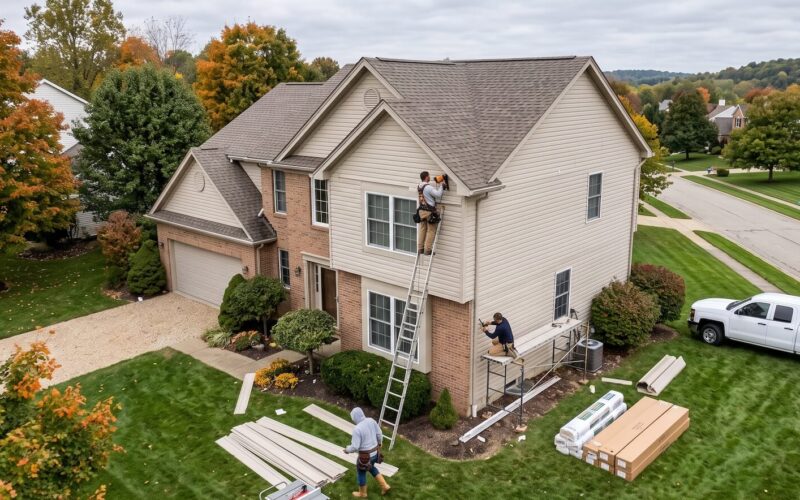
Roofing is one of the biggest investments a homeowner makes. In Northeast Ohio — with its severe winters, heavy snow, ice dams, and spring freeze-thaw cycles — choosing the right roofing method is especially important. Two of the most common options when your roof is aging or suffering damage are a roof overlay (re-roof) versus a full roof tear-off and replacement. Each has pros and cons, and the choice you make now can affect durability, cost, energy efficiency, and resale value. Here’s a detailed comparison to help Cleveland, Medina County, and Greater Cleveland homeowners make the best decision.
What Is a Roof Overlay vs. a Roof Tear-Off?
A roof overlay (sometimes called re-roof or layover) is the process of installing new shingles directly over the existing roof’s shingles without removing the old layer. Overlay is only possible in certain conditions—such as when the existing roof is in relatively good shape, there’s only one layer of roof shingles present, and the structure can handle the added weight.
A roof tear-off and replacement means removing all existing roofing materials (shingles, underlayment, and sometimes flashing) down to the roof deck (sheathing), fixing or replacing any damaged decking or structural elements, then installing the full new roofing system.
Key Differences: What Homeowners Should Know
Here are the primary factors where the two methods differ, especially for Northeast Ohio climate, building codes, and home values.
Lifespan and Durability
A tear-off and replacement tends to last longer — often 20 to 30 years or more with high-quality materials and proper installation. Overlay roofs typically have shorter useful lifespans — often 15-20 years under good conditions. Because the original layer stays, issues like trapped moisture, less effective sealing, or hidden damage can reduce performance.
Structural Integrity and Hidden Problems
With a tear-off, you can fully inspect the deck, framing, underlayment, flashing, and other areas. You can find rot, water damage, mold, or other underlying issues and repair them. Overlay keeps the old roof, so those underlying issues might remain hidden and worsen over time.
Weight, Code, and Safety Concerns
Overlay adds extra weight because new shingles are being added on top of existing ones. If a roof already has one layer, doubling up might push structural limits, especially under heavy snow loads common in Medina County and Cleveland. Building codes often limit the number of shingle layers (typically no more than two) because of safety and structural issues. You must check local codes, roof framing, and load ratings.
Upfront Cost vs Long-Term Cost
Overlay is cheaper initially. You save on labor, disposal fees, and time. But because it may require replacement earlier and repair of hidden issues later, the long-term cost per year of service can be higher. Tear-off is more expensive upfront but can offer better value over the full lifespan of the roof.
In Ohio, roof replacement (tear-off included) for an average home often ranges from about $6,000 to $12,000+ depending on size, material, and complexity. Overlay might reduce that cost by as much as 20-30% in many cases, but savings must be weighed against other trade-offs.
Time, Disruption, and Waste
Overlay tends to be faster, with less mess, less debris, and fewer disruptions. If weather is moving in fast (fall or winter), overlay might be appealing. Tear-off takes more time, more cleanup, and likely higher disposal costs.
Warranty, Resale Value, and Curb Appeal
A full roof replacement often improves resale value more than an overlay. Buyers tend to prefer roofs with all components new, especially if they plan to stay longer or sell. Warranties (especially material and manufacturer warranties) may have limitations if the job is an overlay. Also, a new roof from tear-off often looks cleaner—without irregularities from underlying old layers.
When Overlay Might Make Sense in Northeast Ohio
A simple overlay isn’t always a bad choice. There are situations where it can be reasonable, provided you understand the limitations.
- Your existing shingles are in good condition: no rot, no leaks, the deck is solid, and the structure is strong.
- Only one layer of old roofing material exists so you’re within building code limits.
- You plan to stay in the home for a limited time, or you might sell relatively soon, and you want to minimize upfront costs.
- Budget constraints are significant and you want a temporary refresh while saving for a full replacement later.
- Weather or time constraints make a faster job desirable (e.g., before winter sets in).
When Tear-Off & Replacement Is the Better Choice
For Northeast Ohio homeowners, here are conditions where a full tear-off is usually the right move:
- Your roof has two existing shingle layers already. You can’t legally overlay again in many areas.
- There’s visible roof deck damage: sagging, rotting, mold, leaks, compromised flashing, ice dam damage, or water staining in ceilings.
- You want maximum lifespan, minimal maintenance, and the ability to upgrade insulation or ventilation.
- You intend to live in the house long-term or want to increase resale value significantly.
- Complex residential roof designs, many penetrations, steep slopes, or multiple valleys benefit from tear-off, because new flashing, vents, and underlayment are easier to install correctly on a clean surface.
Cost Estimates & Example Scenarios for Cleveland / Medina County
While each home is unique, here are ballpark numbers that reflect what many homeowners in Northeast Ohio might expect, given average roofs with asphalt shingles, moderate complexity:
- An overlay on a modest 1,500 sq ft roof might run somewhere around $6,000–$9,000 depending on condition, pitch, and local labor rates.
- The same roof torn off and replaced might cost $8,000–$12,000+ or more, especially if decking needs repair, flashing replaced, or slope/complexity is higher.
- For homes with steeper roofs, many valleys, skylights, chimneys, or steep pitches (common in older Cleveland homes), the cost difference widens because tear-off requires more work per square foot.
These numbers reflect averages; always get at least two or three estimates from reputable, insured contractors. Confirm what’s included, such as deck repair, flashing, underlayment, ice and water shield, and ventilation.
Pros and Cons: Reroofing vs. Roof Replacement
| Factor | Overlay (Re-Roof) | Tear-Off & Full Replacement |
|---|---|---|
| Upfront Cost | Lower | Higher |
| Installation Time / Disruption | Less time, less mess | More time, more debris, more disruption |
| Hidden Damage / Structural Issues | Less likely to discover; risks hidden | Can identify & address problems underneath |
| Lifespan | Shorter (maybe ~15-20 yrs if conditions are good) | Longer (20-30+ yrs with good materials & care) |
| Weight & Load Issues | Adds load; riskier under snow and ice | Old weight removed; safer load profile |
| Warranty Coverage | Sometimes limited | Full coverage more likely |
| Resale Value / Curb Appeal | Smaller impact | Higher resale appeal and value |
What to Ask Your Roofing Contractor
To make the best decision, ask your contractor:
- Does my roof currently have one or more layers of shingles?
- Can you inspect the decking, flashing, and underlayment if we proceed?
- What kind of lifespan can I expect under both options, given local weather?
- How will warranties differ between overlay vs. tear-off?
- What’s the detailed cost breakdown?
- Will overlay add weight that requires structural reinforcement?
- Are there local codes, permits, or HOA rules that might limit overlays?
Climate & Code-Related Issues Specific to Northeast Ohio Homes
- Snow & Ice: Heavy snow loads and ice dams are common. Tear-off allows installation of proper underlayment, ice and water shield, and ventilation.
- Freeze/Thaw Cycles: Repeated freezing and thawing damage old shingles; this effect worsens if underlying structure is compromised.
- Local Codes & Permits: Some municipalities in Medina County or Cuyahoga County limit overlay layers or require full removal under certain conditions.
- Resale in Local Market: Buyers in the Greater Cleveland area often expect full tear-off on homes over a certain age; appraisers may value full replacements more highly.
Making the Decision: Overlay vs Tear-Off
Here’s a process to help you decide:
- Get a full roof inspection by a professional roofer.
- Determine condition of existing roofing: deck, flashing, underlayment.
- Check local building codes and load capacity.
- Get cost estimates for both overlay and tear-off.
- Consider how long you plan to stay in the home.
- Factor in energy efficiency, warranty, and resale value.
- Think long term: sometimes paying more now (tear-off) saves more over 10–20 years.
Roof Overlay vs. Roof Replacement FAQs
A roof overlay, also called a re-roof, involves installing new shingles directly over existing shingles without removing the old layer. A roof tear-off removes all old roofing materials down to the deck before installing a completely new roofing system.
Yes, a roof overlay typically costs less upfront because it requires less labor and disposal of materials. However, a tear-off often provides better long-term value since it lasts longer, addresses underlying issues, and can improve warranties and resale value.
In most cases, no. Building codes in many areas, including Northeast Ohio, do not allow more than two layers of shingles due to structural weight concerns and safety risks. If your roof already has two layers, a tear-off is usually required.
A roof overlay generally lasts about 15–20 years, depending on conditions, while a full tear-off and replacement can last 20–30 years or more with quality materials and proper installation.
Because Northeast Ohio experiences heavy snow, ice dams, and freeze-thaw cycles, a full tear-off and replacement is often the more durable choice. Tear-off allows for inspection of the deck, proper underlayment installation, and better long-term protection against harsh weather.
Conclusion
For many Greater Cleveland and Medina County homeowners, a roof overlay can seem like an appealing shortcut: lower cost, less time, less mess. But the trade-offs — shorter lifespan, potential hidden damage, higher long-term costs, and structural concerns — can make a tear-off and full replacement the smarter investment, especially given Ohio’s weather.
If your roof is showing signs of underlying damage, has two layers already, or you want the longest lasting, best performing system, a full tear-off is likely your best option. If instead your roof is in good shape, has only one layer, and budget is tight, overlay might be acceptable in certain cases.
At Python Roofing, we help homeowners in Northeast Ohio evaluate these options, providing local expertise, accurate estimates, and installations built for the region’s conditions. Contact us for a free inspection so you know which route makes sense for your roof.